New Voices in the Locker Room: How International Players Are Changing Chicago Youth Hockey
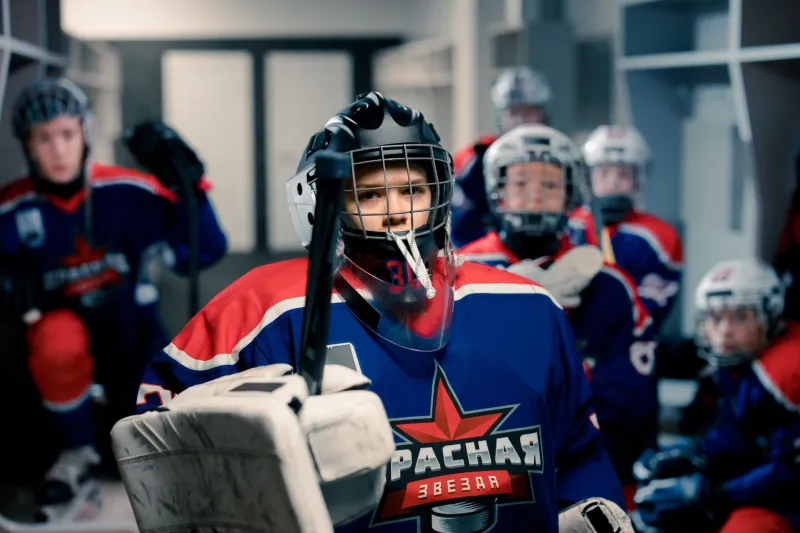
A few years ago, the locker room at a competitive Chicago-area youth hockey program was a pretty homogenous place. Kids from Elmhurst, Naperville, and the northwest suburbs, most of whom had been skating together since mites. Same neighborhoods, same schools, same cultural shorthand.
Today, that same locker room might include a kid from Stockholm who's been on skates since he was three, a forward from Toronto whose family relocated for a parent's job, and a defenseman from the Czech Republic whose parents made a deliberate decision to move to the United States specifically to access elite youth hockey development.
Chicago's youth hockey landscape is quietly going international — and the conversation about what that means for the game here is just getting started.
Why Chicago?
For families outside the US eyeing elite youth hockey development, Chicago makes sense on multiple levels. The city has a dense network of Tier 1 and Tier 2 programs, high-quality ice facilities, and a pipeline to college hockey and the USHL that's well-established. The Chicago Steel, one of the most respected programs in the USHL, gives older players a visible path forward. And compared to traditional hockey markets like Boston or Minnesota, Chicago's programs have historically had more room for incoming talent.
"We've seen a noticeable increase in families from Canada and Europe reaching out over the last three or four years," said one administrator at a prominent AAA program in the Chicago suburbs. "Some are here for work. Some are specifically here for hockey. It's a mix, but the numbers are going up."
The Canadian contingent tends to arrive through corporate relocations — families following a parent's career who happen to have a hockey-obsessed kid in tow. The European wave is more intentional. Families from Sweden, Finland, Slovakia, and the Czech Republic are increasingly researching American youth hockey programs as a development pathway, particularly as NCAA scholarships have become better understood abroad.
What International Players Bring
Coaches who've worked with players from European programs consistently describe a different foundation in skating and puck skills — the product of development systems that emphasize technique over physicality at younger ages.
"The European kids we've had come through tend to have incredibly clean skating mechanics," said one head coach at a bantam-level program in the western suburbs. "They're not always the biggest or the most physically developed, but their edges are precise and they see the ice differently. It pushes our American kids to up their technical game."
Canadian players, meanwhile, often bring a competitive intensity and game-situation awareness that reflects the deeply embedded hockey culture north of the border. Minor hockey in Ontario and Quebec is intensely competitive, and players who've come through those systems have typically played high-stakes games from a young age.
The competitive lift is real. Coaches across the board describe international players as raising the standard in practice and pushing locker room culture toward higher expectations.
The Host Family Experience
For international players who arrive without family infrastructure in Chicago, the host family system is the backbone of their experience. Families who open their homes to young players from abroad describe a rewarding but complex dynamic.
"Our first year hosting a player from Sweden, we had no idea what to expect," said one host mom from the northwest suburbs who asked to remain anonymous. "He was 15, didn't know anyone, and was navigating a completely different school system and culture while trying to make a hockey team. There's a real adjustment period."
Language barriers, homesickness, and the pressure of performing on the ice while managing everything else can create stress for young international players. Host families and program administrators who handle these situations well describe clear communication, structured support, and realistic expectations as essential ingredients.
For the players who make it work, the experience is often transformative. "He came in quiet and a little lost," the same host mom recalled. "By the end of the season he was one of the leaders on the team. Watching that happen was something special."
The Homegrown Talent Question
The arrival of international talent isn't without tension. Chicago-area families who've invested years and significant money developing their kids in local programs sometimes find those players competing for roster spots against players recruited from abroad. It's a legitimate concern, and it's one that program administrators are navigating with varying degrees of transparency.
"My son has been in this organization since he was seven," said one Chicago-area hockey dad whose son plays at the midget level. "When a kid from Europe shows up at tryouts and takes his spot, I want to understand how that decision was made. Is it purely performance-based? Are there other factors? Those are fair questions."
Coaches and program directors who handle this well emphasize that the standard has to be the standard — the best players make the team, regardless of where they're from. But they also acknowledge the responsibility to develop homegrown talent and not simply use international recruiting as a shortcut to a stronger roster.
"We're a Chicago program," said one director. "Our first obligation is to the kids from this community. International players can absolutely be part of what we do, but they shouldn't be displacing local kids who've earned their place."
Cultural Exchange on the Ice
Beyond the competitive dynamics, the cultural exchange happening in Chicago youth hockey locker rooms is genuinely interesting. American kids are being exposed to different approaches to the game, different styles of communication, and different ways of thinking about team and individual development.
European players often bring a more skill-focused mindset and a comfort with creativity on the puck. Canadian players tend to bring a gritty, team-first mentality. American players contribute physicality and an athleticism shaped by multi-sport backgrounds. When those elements mix well, the product on the ice can be something special.
"My favorite part of coaching a mixed team is watching the styles blend," said one coach. "The American kid learns to be more patient with the puck. The European kid learns to compete harder in the corners. They make each other better."
Chicago's hockey story has always been one of layers — neighborhood pride, immigrant communities, working-class grit. Adding an international dimension to that story feels, in some ways, like a natural evolution. The rink has always been a place where different worlds collide. These days, those worlds just have more passport stamps.