Before the Buzzer Sounds: Inside the Secret Daily Grind of Chicago's Most Driven Youth Hockey Players
There's a certain kind of hockey player you don't hear much about. Not because they're not talented — they absolutely are — but because the stuff they do to get better happens away from the spotlight. No cameras. No coaches watching. No parents cheering from the stands. Just a kid, a goal, and a stubborn refusal to be average.
In Chicago's youth hockey community, these players exist at every level, from the mite squads scraping around at Johnny's IceHouse to the bantam lines grinding through early-morning skates at Edge Ice Arena in Bensenville. They're the ones who show up five minutes before everyone else and leave ten minutes after. They're the rink rats — and if you want to understand what separates the good from the great, you have to understand what they're doing when nobody's watching.
The Morning Ritual Nobody Talks About
Forget the highlight-reel goals. The real story starts before most families are even thinking about breakfast.
For a lot of Chicago's most committed young players, the morning routine is almost monastic. We're talking stretching sequences they've built themselves over months, nutrition habits they've researched on their own, and mental prep work that looks less like sports training and more like meditation. One peewee-level player from the northwest suburbs described waking up every morning and spending fifteen minutes visualizing game scenarios — specific situations, specific decisions — before his feet hit the floor.
"My coach never told me to do that," he said. "I read about it somewhere and just started doing it."
That kind of self-directed discipline is a thread that runs through almost every conversation you have with Chicago's most serious young players. They're not waiting to be told what to do. They're hunting for edges.
Film Study Isn't Just for Coaches
Here's something that might catch you off guard: a growing number of youth players in the Chicago area are watching game film on their own time. Not because a coach assigned it — because they want to.
Some are studying their own games, looking for patterns in where they lose puck battles or where their positioning breaks down. Others are watching NHL games with a completely different mindset than casual fans. They're not watching to enjoy the game. They're watching to steal from it.
One bantam forward from the South Side described spending Sunday afternoons rewatching Blackhawks games — not the current roster, but archival footage from the dynasty years. "I watch how [Jonathan] Toews moved without the puck," he said. "Like, where he positions himself before the play even develops. That stuff doesn't show up in any drill."
This kind of self-guided film work is hard to quantify, but coaches who've worked in Chicago youth hockey for a long time will tell you they can spot the players who do it. There's a certain anticipatory quality to their game — a step ahead, a read that seems almost instinctive — that usually traces back to hundreds of hours of quiet observation.
The Unglamorous Skills Work
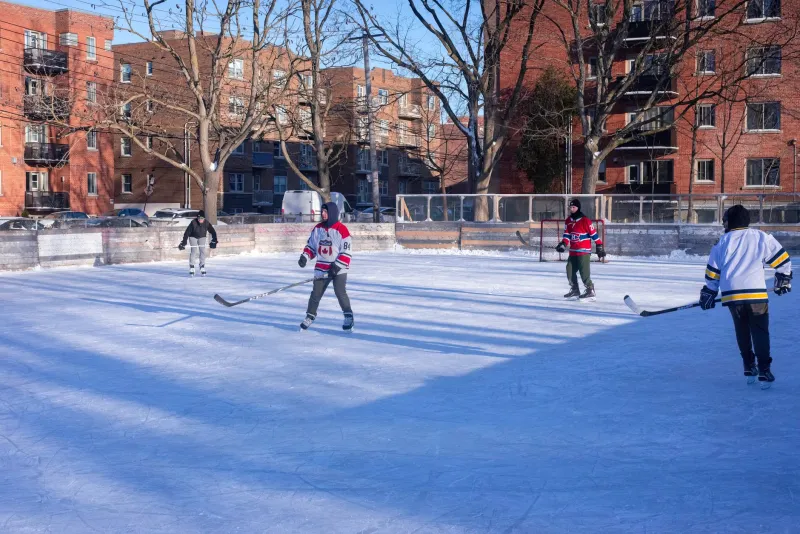
Stickhandling in the basement. Shooting into a net strung up in the garage. Practicing edge work in roller blades on the driveway when the rink isn't available. This is the stuff that doesn't make the Instagram reel, but it's also the stuff that quietly builds the foundation for everything else.
Chicago winters are brutal, but they're actually a gift for dedicated players — the cold keeps you honest about what you're willing to do. A lot of families in neighborhoods like Edison Park, Beverly, and the western suburbs have some version of a backyard setup, even if it's just a shooting pad and a beat-up net. The players who use those setups consistently, through the middle of February when nobody else wants to be outside, are the ones who show up in March with noticeably better hands.
But the work isn't always physical. Mental reps count too. Visualization, breathing techniques, pre-game routines — these are tools that elite programs at the college and pro level have used for decades, and they're slowly filtering down into the youth game. The players who find them on their own, before anyone hands them a program, tend to internalize them more deeply.
Nutrition Discipline at 13 Is Harder Than It Sounds
Let's be honest: asking a thirteen-year-old to care about what they eat is a tough sell. The vending machine at the rink is right there. The team is going to McDonald's after the game. Everyone else is having the nachos.
But the players who are genuinely serious about their development — the ones who've made an internal commitment that goes beyond just showing up to practice — tend to start paying attention to nutrition earlier than their peers. Not in an obsessive or unhealthy way, but in a practical, cause-and-effect way. They notice they feel sluggish after certain meals. They notice their energy on the ice is different when they've slept eight hours versus six.
Parents of these players often describe a shift that happens somewhere around midget age, where the kid starts making food choices independently — reaching for the fruit instead of the chips, drinking water instead of sports drinks during practice, actually eating breakfast before a 6 a.m. skate instead of rolling in on empty.
It's not glamorous. It's not dramatic. But over a full season, those micro-decisions compound into something real.
What This Means for the Rest of Us
Here's the thing about rink rats: you can't manufacture them. You can expose kids to the right environment, give them tools, show them what elite commitment looks like — but the internal drive that sends a player to the garage at 9 p.m. to work on their backhand? That has to come from inside.
What Chicago's youth hockey community can do, though, is create space for that drive to exist. Coaches who celebrate the process, not just the results. Organizations that reward consistency over flash. Parents who back off enough to let their kids develop their own relationship with the game.
The rink rats are already out there. They're in your organization right now, probably the quiet kid who stays after practice to ask one more question or the player who shows up to the optional skate when half the team doesn't bother.
Pay attention to them. Not because they need the validation — they're going to put in the work whether you notice or not — but because watching what they do when nobody's watching might be the most instructive thing you see all season.
That's how the game gets better. One unglamorous rep at a time.