Blood, Ice, and Neighborhood Pride: How Chicago's Hockey Enclaves Are Forging Tomorrow's Players
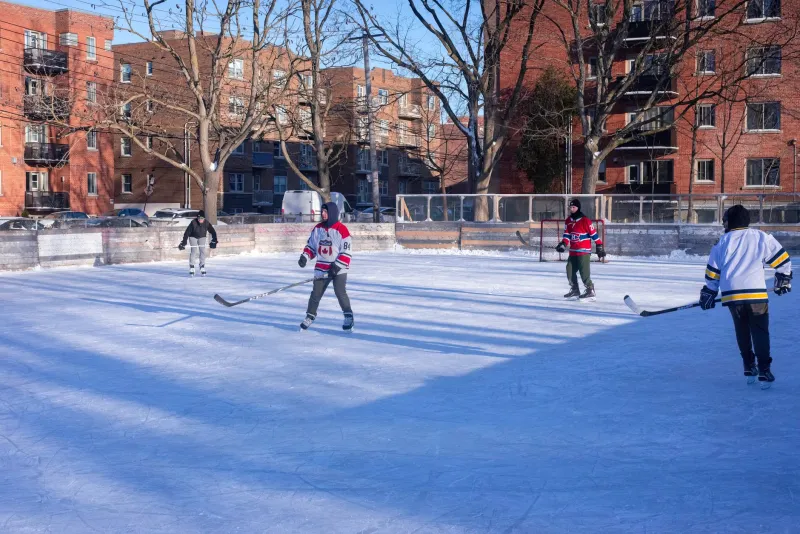
Ask any Chicago hockey lifer where they're from before you ask what team they play for. Chances are, the answer tells you everything you need to know.
There's something deeply embedded in this city's hockey culture that goes beyond jerseys and standings. It lives in the rinks that smell like popcorn and old leather, in the parents who drove the same route their own parents drove, in the coaches who played against each other twenty years ago and now watch their kids do the same. Chicago hockey isn't just a sport here — it's a zip code thing.
And increasingly, player development experts are paying attention to what that actually means for the kids growing up inside it.
Three Communities, Three Identities
Spend any time around Chicago youth hockey and you'll start to notice distinct personalities attached to different parts of the city. The North Shore crews — think Evanston, Wilmette, Winnetka — carry a certain polish. Programs there tend to have strong organizational infrastructure, active booster cultures, and families who've been season-ticket holders at the United Center for decades. Hockey is practically a heritage sport in some of those households.
Head west toward the West Loop and the neighborhoods bleeding into Oak Park or Berwyn, and the vibe shifts. The programs there are scrappier in the best possible sense. Rink access has historically been harder to come by, which means kids who make it through those systems have usually earned every ounce of their development the hard way. Coaches in that corridor tend to preach compete level above almost everything else.
Then there's the South Side, where the hockey community is smaller but fiercely proud. It doesn't get the same media attention, doesn't always have the same resources — but it punches well above its weight when it comes to producing players with grit, coachability, and a chip on their shoulder that never quite goes away. South Side hockey families will tell you without blinking that their kids are built different. And honestly? A lot of scouts quietly agree.
What Rivalry Actually Does to a Kid
Here's the thing about neighborhood rivalries that doesn't show up in any skills clinic brochure: they create stakes that are genuinely personal. When a North Shore kid lines up against a West Loop team, both benches know the history. Coaches have traded chirps at association meetings. Parents remember last year's game-winner. That context doesn't just add drama — it adds pressure, and pressure, applied the right way, accelerates development.
"There's no faking it when you play against a team that your dad played against," said one longtime Chicago-area coach who asked not to be named so he could speak candidly. "Those kids aren't playing for a travel team ranking. They're playing for their neighborhood. That's a completely different internal motivation."
Sports psychologists have long noted that intrinsic, identity-based motivation tends to be more durable than external rewards like trophies or rankings. When a kid associates their hockey performance with who they are and where they come from, the drive to improve becomes self-sustaining in a way that chasing a national rating simply isn't.
Family Legacies and the Weight They Carry
Walk into any rink in Chicago's established hockey neighborhoods and you'll find last names that repeat across decades of photos on the wall. Brothers who played here, fathers before them, maybe a grandfather who laced up before the rink even had proper locker rooms. That lineage creates something complicated and powerful for young players.
On one hand, it can be a burden. Kids carrying a family name in a close-knit hockey community feel the weight of expectation in a way that an anonymous travel team player never will. On the other hand, it provides a kind of built-in mentorship network that money genuinely cannot buy. A fifteen-year-old in Wilmette can pick up the phone and call a guy who played juniors in the '90s and still coaches mites on Saturday mornings — not because they paid for a skills session, but because that's just what people do in this community.
"My son knows he can walk into that rink and find someone who's been through everything he's going through," said one hockey mom from the North Shore who's been involved in the local program for over a decade. "That's not something you can manufacture. It took generations to build."
Where Suburban Travel Structures Fall Short
None of this is to say that travel hockey programs are bad — far from it. The best suburban travel organizations in the Chicagoland area do tremendous work developing players and opening doors. But there's a specific kind of rootlessness that can creep into a travel-first model, where kids cycle through teams, coaches change constantly, and there's no persistent community memory tying it all together.
In neighborhood-based programs, accountability runs in multiple directions. Players are accountable to their coaches, sure — but also to their neighbors, their family friends, the guy who owns the diner two blocks from the rink. That web of accountability isn't always comfortable. But it tends to produce players who understand that how you carry yourself matters as much as your skating split.
Several Chicago-area coaches have started deliberately trying to incorporate neighborhood identity into their team culture, even within travel program structures. Pre-game rituals that reference local history, connecting players with alumni from the same community, creating a sense of place even when the team is playing three states away. It's an acknowledgment that the neighborhood model has something worth preserving.
What the Next Generation Is Inheriting
The honest challenge facing Chicago's hockey neighborhoods right now is continuity. Gentrification has reshaped some of these communities. Rink closures have forced consolidations that blur the old geographic lines. Families who might have stayed rooted in one neighborhood for three generations are more mobile now, and that mobility can dilute the very community bonds that made these development environments special.
But talk to the coaches and parents who are still in it, and you'll find a stubborn optimism. They're not naive about the pressures — they just believe the thing they've built is worth fighting for.
"Every generation thinks they're the last ones who'll care about this stuff," said one South Side hockey dad who's been coaching youth players for fifteen years. "Then you watch a ten-year-old score his first goal in front of people who've known his family forever, and you realize — nah. This isn't going anywhere."
Chicago hockey has always been about more than the game itself. It's about the neighborhoods that claimed it, the families that carried it forward, and the rivalries that kept everyone honest. For the next generation of players coming up through these communities, that inheritance isn't a relic. It's an edge.