Survive the Tournament Grind: A Chicago Hockey Parent's Guide to Keeping Your Budget and Sanity Intact
It starts innocently enough. One fall classic here, a holiday tournament there. Then before you know it, you're eating gas station sandwiches on I-90, squinting at a hotel app at midnight, and wondering how your kid's hockey schedule quietly became a second mortgage.
Tournament season is a rite of passage for Chicago hockey families — and honestly, it can be an incredible experience. But without a plan, it can also drain your bank account and your patience faster than a bad power play. So let's talk about how to approach it smarter.
Not All Tournaments Are Created Equal
Here's the truth that veteran hockey parents learn the hard way: more tournaments does not equal more development. The sheer volume of events on the Chicagoland circuit — from local rink showcases to multi-day travel events in Michigan or Minnesota — can make it feel like you need to be everywhere at once. You don't.
Before committing to any event, ask yourself a few pointed questions. Does this tournament draw scouts or coaches from programs your player is actually targeting? Is the competition level going to challenge your kid, or is it a glorified scrimmage? Will the team get meaningful ice time, or is there a real chance of getting bounced after two games and spending three nights in a Naperville Hampton Inn for six periods of hockey?
Coaches and player development staff are your best resource here. A good coach will tell you which tournaments genuinely move the needle for player exposure and skill testing — and which ones are basically just revenue events dressed up with nice banners.
Build a Realistic Tournament Budget (Then Pad It)
Let's get into the dollars. The average multi-day travel hockey tournament can run a family anywhere from $500 to well over $1,500 once you factor in hotel rooms, gas or flights, food, tournament fees, and the inevitable equipment emergency that always seems to happen 200 miles from your regular pro shop.
Start by listing every tournament your team is considering for the season and building a rough cost estimate for each one. Be honest — don't lowball the hotel or pretend you won't stop at the arena concession stand. Then prioritize. Which two or three events are genuinely high-value? Which ones are optional add-ons?
Some practical budget moves that experienced Chicago hockey families swear by:
- Book hotels early and use points. Tournament host hotels fill fast, but they're not always the best deal. Check nearby options and use any travel rewards you've been sitting on.
- Carpool aggressively. Coordinate with other families on your team. Splitting a drive to Rockford or Indianapolis cuts costs and makes the trip more fun.
- Pack a cooler. Seriously. Between hotel breakfasts, arena food, and restaurant dinners, meal costs on a tournament weekend add up shockingly fast. A cooler with snacks, sandwiches, and drinks can save $50 to $100 per day.
- Set a season cap. Decide at the start of the year what you're comfortable spending on tournaments total, and stick to it. It's much easier to say no to a last-minute event when you've already made that decision in advance.
Managing the Family Stress Factor
Money is only half the equation. Tournament weekends are physically and emotionally demanding — early wake-ups, long drives, unpredictable schedules, and the emotional rollercoaster of competitive hockey all piled into 48 to 72 hours. For families with multiple kids or complicated schedules, it can feel like a logistical puzzle that never quite solves itself.
A few things that help:
Communicate early with your family. Before the season kicks off, sit down and map out the tournament calendar together. Make sure everyone — including siblings who might be missing their own activities — has a voice in the conversation. Kids who feel heard are a lot more cooperative when it's time to load up the car at 5 a.m.
Protect some weekends. It's okay — actually, it's important — to have weekends that belong to your family and not to hockey. Burnout is real, and it affects parents just as much as players. Leaving a little white space on the calendar pays dividends in energy and attitude when it matters most.
Let the player lead. One of the most common mistakes well-meaning hockey parents make is investing more emotionally in tournament outcomes than their kid does. Check in with your player. Are they excited about this tournament? Nervous? Dreading it? Their headspace matters more than the bracket seeding.
What Actually Develops Players at Tournaments
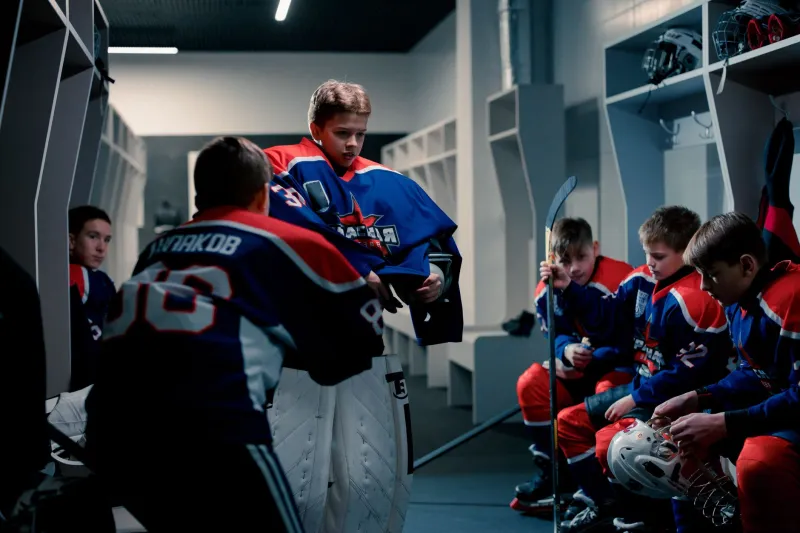
Here's something coaches will tell you that doesn't always make it back to the bleachers: the games themselves aren't always the most valuable part of a tournament weekend. The time between games — team meals, locker room conversations, navigating wins and losses together — is where a lot of the real growth happens.
Encourage your player to be present with their teammates off the ice. Put the phone down during team dinners. Engage with the experience. Those shared moments build chemistry and resilience in ways that an extra drill session simply can't replicate.
Also worth noting: tournaments with strong competition and good officiating teach players how to perform under pressure and adapt in real time. That's genuinely irreplaceable development. But it only works when players are rested, mentally engaged, and not burned out from playing in their fourth tournament in six weeks.
The Long Game
At the end of the day, tournament season is one piece of a much bigger picture. The Chicago hockey community is deep and competitive, and there's no shortage of opportunities for players who are developing well and staying healthy. The families who tend to get the most out of the tournament circuit are the ones who approach it with intention — choosing events carefully, managing costs without obsessing over them, and keeping the focus on the player's growth rather than the scoreboard.
The goal isn't to survive tournament season. It's to come out the other side with a kid who's a better hockey player, a family that's still on speaking terms, and maybe a few bucks left in the account for next year.
That's a win worth celebrating — no trophy required.