Silent Hits, Serious Consequences: The Concussion Crisis Chicago Youth Hockey Can't Keep Ignoring
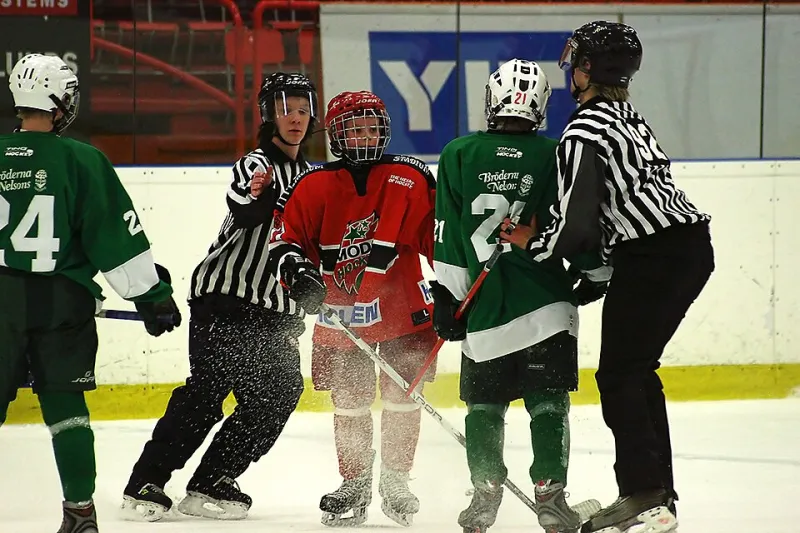
Photo: Thund3rh3art (talk), CC BY 3.0, via Wikimedia Commons
It happens fast. A kid takes a hit along the boards, wobbles for a second, shakes it off, and keeps skating. The coach doesn't pull him. His parents in the stands exhale with relief. Everyone moves on.
Except sometimes, they shouldn't.
Across Chicago's youth hockey community — from the suburban rinks in Orland Park to the ice sheets up in Northbrook — there's a quiet problem that nobody wants to say out loud: concussions are being missed, minimized, and mismanaged. And the kids paying the price are the ones we're all here to cheer for.
What the Numbers Aren't Telling You
Hockey consistently ranks among the top sports for concussion rates in youth athletics. Studies from the American Journal of Sports Medicine have found that ice hockey players suffer concussions at a rate comparable to football — a fact that tends to surprise parents who signed their kids up thinking the sport was safer than the gridiron.
But here's the problem with numbers: they only count what gets reported. And in youth hockey, a significant chunk of concussions never make it into any official log.
One athletic trainer who works with multiple Chicago-area travel programs — who asked not to be named because of relationships with the organizations — put it bluntly: "I'd estimate that for every concussion that gets formally documented, there are two or three that just... disappear. A kid says he's fine, the coach takes his word for it, and nobody follows up."
That's not an indictment of any single team or coach. It's a systemic issue rooted in culture, pressure, and a fundamental misunderstanding of what a concussion actually looks like.
The "Shake It Off" Problem
Talk to enough Chicago hockey families and a pattern emerges. Parents describe scenarios where their child complained of a headache after practice but didn't want to miss the tournament that weekend. Coaches who are well-meaning but undertrained in concussion recognition. Kids who've absorbed the unspoken message that toughness means playing through discomfort — any discomfort.
One Elmhurst mom, whose 13-year-old plays AAA hockey, described a moment last season that still bothers her. "He took an awkward hit in a scrimmage and came off the ice saying his head hurt. The coach said, 'You'll be fine, drink some water.' No one asked him any questions. No one checked his eyes. He played the next period."
Her son was fine — that time. But the casual dismissal of a potential head injury is exactly the kind of moment that can turn into something much worse.
Dr. Melissa Hartley, a sports medicine physician at a northwest suburban clinic who treats young athletes, sees the downstream effects regularly. "The biggest issue we face is delayed presentation," she says. "A kid gets hit on a Saturday, doesn't feel great Sunday, goes to school Monday, and by Tuesday the symptoms are severe enough that the parents finally bring them in. At that point, we're already behind."
What Good Protocol Actually Looks Like — and What's Missing
USA Hockey has concussion protocols on the books. Illinois has return-to-play laws. On paper, the framework exists. The reality on the ice is messier.
Many Chicago youth programs rely on volunteer coaches who have completed basic safety certifications but haven't had meaningful, hands-on training in recognizing concussion symptoms in real time. There's a difference between knowing that concussions exist and actually being able to spot one on a bench during a fast-moving game.
The gold standard, according to sports medicine professionals, involves a few non-negotiables:
- Any suspected concussion means immediate removal from play. No exceptions, no "let's see how he does next shift."
- Evaluation by a trained medical professional before return to any activity — not just a parent's gut check or a coach's eyeball test.
- A structured, step-by-step return-to-play process that typically spans a minimum of one week for uncomplicated cases, and longer for anything more serious.
- Documentation. Every incident, every symptom, every step of recovery should be written down and shared with parents.
The honest truth? A lot of Chicago programs are hitting maybe two of those four marks consistently.
The Pressure Parents Don't Talk About
Here's the uncomfortable part: coaches and organizations aren't the only ones pushing kids back onto the ice too soon. Some of the pressure comes from families themselves.
Tournament season is expensive. Travel fees, hotel bookings, entry costs — a family might have $800 tied up in a weekend event. When a kid takes a hit on Friday night and wants to play Saturday morning, the financial and emotional stakes make it really hard to say "sit down."
"I'm not proud of it," admits one Oak Park dad whose son plays Bantam hockey. "But we'd already paid for the hotel. He said he felt okay. I told myself he was fine because I wanted him to be fine."
That kind of self-deception is deeply human. It's also genuinely dangerous.
Dr. Hartley is direct about the stakes: "A second impact before the brain has recovered from the first can be catastrophic. We're not talking about missing a tournament. We're talking about long-term cognitive effects, chronic headaches, and in rare but real cases, life-altering injury."
What Chicago Families Can Do Right Now
This isn't a story without a path forward. Parents, players, and coaches all have real tools available to them — they just need to actually use them.
Learn the symptoms beyond "headache." Concussion signs include confusion, feeling slowed down, sensitivity to light or noise, sleep disruption, emotional changes, and difficulty concentrating. A headache is just one flag among many.
Ask your organization direct questions. Before the season starts, ask your program's director: What's your concussion protocol? Who makes the call to pull a player? What's the return-to-play process? If the answers are vague, that tells you something.
Get a baseline. Computerized neurocognitive testing — like the ImPACT test — establishes a pre-season cognitive baseline so that post-injury comparisons are actually meaningful. Some Chicago programs offer this; if yours doesn't, ask why not.
Trust your kid — and teach them to trust themselves. Young athletes need to hear explicitly that reporting symptoms is brave, not weak. The culture of hiding injuries starts early and gets reinforced constantly. Counter that message at home.
When in doubt, sit out. It's the simplest rule and the hardest to follow. Make it a family policy before the season, not a judgment call in the heat of a tournament.
The Bigger Picture
Chicago's youth hockey community is full of people who genuinely care about these kids. The coaches putting in long hours, the parents logging thousands of miles on the expressway, the organizations building programs from scratch — the love for the game is real.
But love for the game can't be an excuse for looking away from a real and documented risk. Concussions don't announce themselves with dramatic symptoms every time. Sometimes they look like a kid who's just a little off. Sometimes they look like nothing at all — until they look like everything.
The rink is supposed to be a place where Chicago's young players get tougher, smarter, and better. That only works if they're healthy enough to keep showing up. Getting serious about concussions isn't soft. It's the whole point.