Mind Over Mask: How Chicago's Best Youth Coaches Are Unlocking the Mental Game for Young Goalies
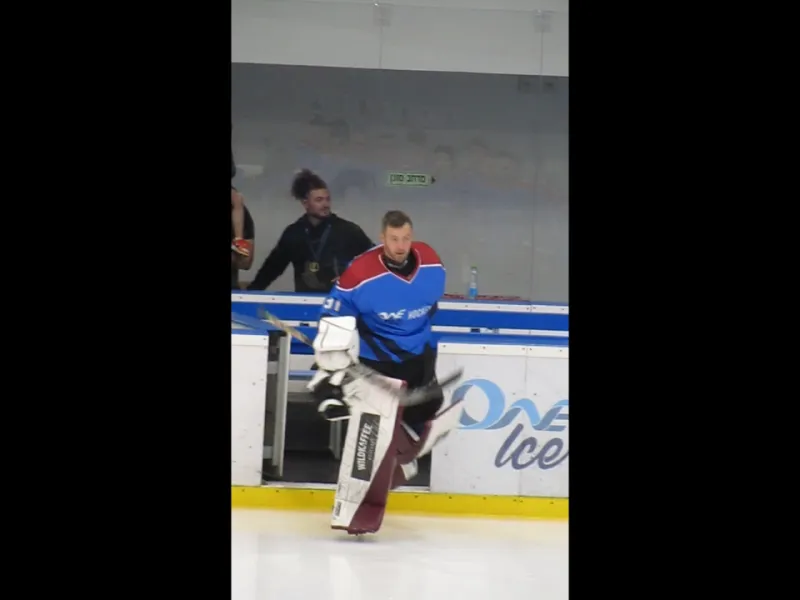
Photo: Benjamin Press, CC BY-SA 4.0, via Wikimedia Commons
Every Chicago hockey parent has watched it happen. A young goalie lets in a soft goal early in the first period, and suddenly the whole game changes — not on the scoreboard, but in that kid's eyes. The shoulders drop. The glove hand gets lazy. The butterfly slides a half-second too slow. What started as a single bad bounce turns into a full-blown confidence spiral.
Technical fixes won't solve that problem. You can run butterfly slides and post integrations until the Zamboni needs new blades, and it won't matter if a 12-year-old can't shake off a bad goal before the next face-off. That's the reality a growing number of Chicago youth hockey coaches are confronting head-on — and the way they're responding is reshaping how this city develops its netminders.
The Shift Happening on Chicago Ice
For a long time, goalie coaching in youth hockey followed a pretty predictable script: work on positioning, footwork, angles, and rebound control. Repeat until it clicks. It's not that those things don't matter — they absolutely do. But coaches across Chicago's competitive youth programs are starting to acknowledge something that elite goaltending coaches have known for years: the mental architecture of a goalie is just as important as the technical one.
Some of the most respected goalie coaches in the Chicago area are building what you might call a "confidence infrastructure" around their young netminders. That means intentional feedback loops, individualized communication styles, and a deliberate effort to separate a player's identity from any single performance.
It's a quieter kind of coaching. Less whistle-blowing, more listening. And it's producing goalies who don't just stop pucks — they lead from the crease.
Personalized Feedback: One Size Definitely Doesn't Fit All
Here's something that sounds obvious but gets ignored constantly in youth sports: different kids need different kinds of feedback. Some young goalies need directness — tell them exactly what went wrong and how to fix it, and they'll lock it in. Others shut down entirely under that approach. The same critique that fires one kid up will send another into a two-week slump.
Chicago coaches who are getting real results with their goalies are doing the homework to figure out which player is which. That often means conversations away from the rink — talking to parents, checking in after practices, even asking the goalies themselves how they best receive criticism.
One approach gaining traction in local programs is the "sandwich" feedback model adapted specifically for goalies: start with something that went right, address the correction, then close with a forward-looking statement that puts the player's focus on the next opportunity rather than the last mistake. It sounds simple, but the consistency of applying it — especially after tough goals in game situations — is where the real discipline comes in.
Building the Short Memory
Ask any professional goaltender what the most important mental skill in their position is, and most of them will tell you the same thing: the ability to forget. Not in a careless way, but in the sense of compartmentalizing a bad moment and moving forward without dragging it into the next sequence.
That skill doesn't come naturally to most kids, and it definitely doesn't develop on its own. Chicago coaches who specialize in goaltender development are building specific rituals and routines into their training to help young netminders practice exactly that kind of mental reset.
Some coaches use a physical anchor — a specific movement or gesture the goalie makes after every goal against, almost like a reset button. Others use verbal cues, short phrases the goalie repeats to themselves to redirect attention back to the present moment. A few coaches have incorporated basic mindfulness concepts, teaching kids breathing techniques they can actually use between whistles when the game is getting away from them.
None of this is soft stuff. These are competitive tools. And the goalies who develop these habits early are the ones who tend to stay mentally composed when a game is on the line in March.
Mentorship as a Development Strategy
Beyond the technical and psychological toolkit, there's another layer to what Chicago's most effective goalie coaches are doing: they're creating genuine mentorship relationships. Not just coach-player dynamics, but real investment in who these kids are beyond their save percentage.
That kind of connection pays dividends in ways that are hard to quantify but easy to recognize. A goalie who trusts their coach completely is one who'll take a correction without deflating, who'll push through a rough stretch of games without shutting down, and who'll come back to practice the next day with something to prove rather than something to hide from.
Several Chicago-area programs have also started pairing younger goalies with older ones in structured mentorship setups — not just for technical guidance, but for that peer-to-peer conversation that sometimes lands differently than anything a coach can say. Hearing a 16-year-old tell a 12-year-old, "I had a stretch like that last season, here's how I got through it," can be more powerful than any whiteboard session.
What Parents Can Do (and Avoid)
Let's be real — coaches can do everything right and parents can still undercut the whole thing on the car ride home. The mental work happening on the ice doesn't survive a 20-minute debrief about every goal that got past their kid.
The coaches getting the best results from their young goalies are also communicating clearly with parents about the role they play in the process. The ask is usually simple: keep the post-game conversation light, ask about what your kid enjoyed rather than what went wrong, and trust the process that's being built at practice.
For parents who genuinely want to support their goalie's mental development, the best thing they can do is reinforce the same forward-looking language the coaches are using. Consistency between the rink and the ride home matters more than most people realize.
The New Benchmark for Goalie Development
Chicago youth hockey has always had talent in net. The city produces goalies who can make highlight-reel saves and execute technically sound fundamentals. But the programs that are separating themselves right now are the ones investing in the full picture — the kid behind the mask, not just the mask itself.
The goalies coming out of those environments aren't just better technically. They're steadier under pressure, quicker to recover from mistakes, and more capable of carrying a team when the game gets tight. That's not an accident. It's the result of coaches who decided that building confidence was just as much their job as teaching a proper butterfly.
In a city that takes its hockey seriously — from the Blackhawks on down to the youngest mites at local rinks — that kind of development philosophy is exactly what the next generation of Chicago netminders deserves.